3-Min Exercise Beats Hour Gym Session for Heart Health
I used to think longer workouts automatically meant better results. More time on the treadmill, more calories burned, more heart health points earned, or so I assumed. Turns out that might not be how the body actually works.
A new study is making a pretty bold claim. A few short, hard bursts of exercise could do more for your heart than an entire ninety-minute session of easy cardio. Not slightly more. A lot more.
What The Researchers Actually Did
Scientists at Rockefeller University wanted to dig into something most of us never think about: what actually happens inside the body during different kinds of exercise, not just how out of breath we feel.
They divided a group of people into two groups. One group did six sprints on a stationary bike, just thirty seconds each, with rest in between. The other group pedaled at an easy, steady pace for an hour and a half straight. Before anyone touched a bike, the team drew blood. Then again right after exercise. Then a third time, three hours later, to see how the body kept responding even once the workout was over.
Here’s where it gets interesting. The short sprint sessions shifted almost a quarter of every protein the researchers measured in the blood. The long, gentle ride barely moved the needle, changing a tiny fraction of a percent. Even a longer, moderate treadmill session didn’t come close to what those sprints triggered in just a few minutes.
Why Your Body Reacting This Way Actually Means Something
Okay, so proteins changed. Why should anyone care about that outside a lab?
Because a lot of those specific proteins are tied to things your body genuinely needs: growing new blood vessels, repairing damaged tissue, keeping hormones balanced properly. This isn’t just biology trivia; it’s the stuff that keeps your heart and metabolism running well long term.
To check if this actually mattered for real people’s health, researchers compared their findings against data from over 53,000 people already in a massive health database. What they found lined up. A meaningful chunk of the proteins that spiked after sprinting were linked to a lower risk of heart disease and type 2 diabetes. Some were even connected to slower biological aging, meaning your body acting younger than the number on your birth certificate.
The numbers make the gap obvious. Moderate exercise nudged about three of these protective proteins. Sprinting moved thirty-two.
Paul Cohen, one of the researchers on the study, made a point that stuck with me. He said this same reaction was still showing up after eight weeks of regular training, not just in people trying something new for the first time. Which suggests this isn’t your body simply panicking over unfamiliar stress. It seems to be something sprinting does consistently, every single time.
A Few Points This Study Doesn’t Answer Yet
I’m not going to pretend this study is the final word on anything. Every single participant was male, so we genuinely don’t know yet if women’s bodies would respond the exact same way. That question is still open. The people involved were also already reasonably active, so it’s unclear how someone brand new to exercise would react to the same routine.
Still, this fits into a bigger pattern researchers keep finding lately: you don’t need hours in the gym to get real, measurable benefits. Sometimes a short burst of real effort beats a long stretch of comfortable movement.
Okay, But What Actually Counts As Sprinting
This part trips a lot of people up. Jogging slightly faster than your normal pace isn’t sprinting, not even close.
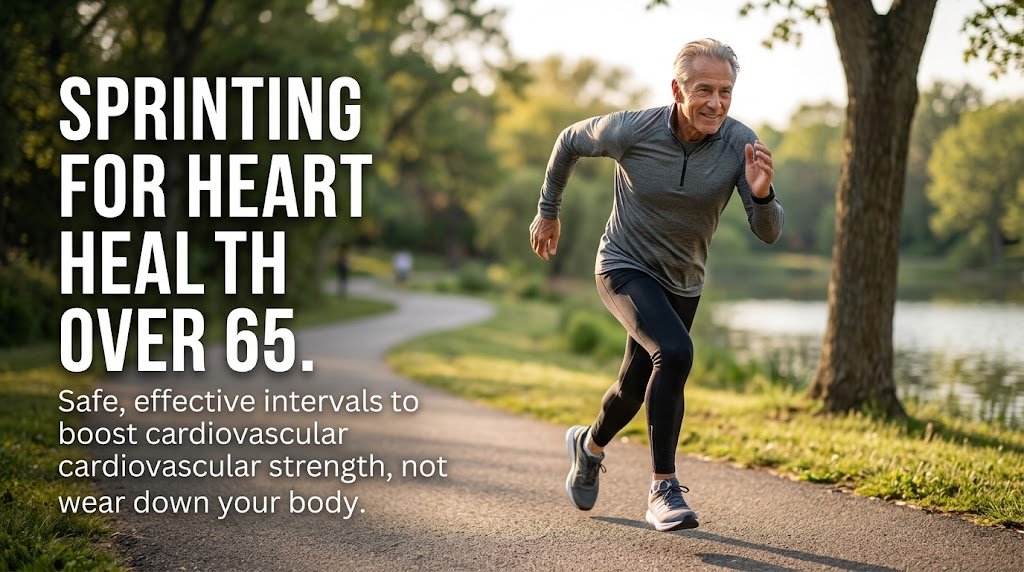
To count as a true sprint, you need to hit somewhere around 80 percent of your max heart rate. A rough way to estimate that number is subtracting your age from 220. You’ll know you’re actually there when it feels genuinely brutal, the kind of pace you couldn’t hold for more than a minute even if you tried. Most people max out around 30 seconds before they have to ease off. If you wear a fitness tracker, it can show your heart rate live so you’re not just guessing.
Everyone’s actual sprint speed looks different depending on fitness level, so don’t compare yourself to anyone else’s pace. Just chase your own effort.
If your knees or joints give you trouble, stick to a stationary bike or a rowing machine instead of sprinting on a treadmill. And whatever you choose, spend at least five minutes warming up first; your body shouldn’t be thrown straight into max effort with zero buildup.
If interval training like this is new to you, especially with any existing health conditions, it’s worth talking to a certified trainer before diving in.
Where This Leaves Us
You don’t need to carve out an hour every evening to actually take care of your heart. A handful of short, intense efforts, done safely and consistently, might get you further than you’d expect. It’s less about clocking more time and more about making the time you do spend actually count, even if that adds up to just three minutes.
Source: This article draws on reporting from Woman & Home, based on a study published in Cell Reports Medicine by researchers at Rockefeller University. For more info, click it on the main link website Woman & Home
You must read this article
