This 20-Second Move Could Calm You Down Fast
You wash your hands for 20 seconds without thinking twice. Turns out, that same small stretch of time might be enough to actually lower your stress response too, and all it takes is placing a hand somewhere comforting.
A handful of recent studies have been circling around one surprisingly simple idea. A brief moment of self-touch, the kind you’d naturally do without even realizing it, might genuinely lower cortisol, the hormone your body releases in response to stress. No app, no breathing routine to memorize, no quiet room required.
The Move Itself Is Almost Too Simple
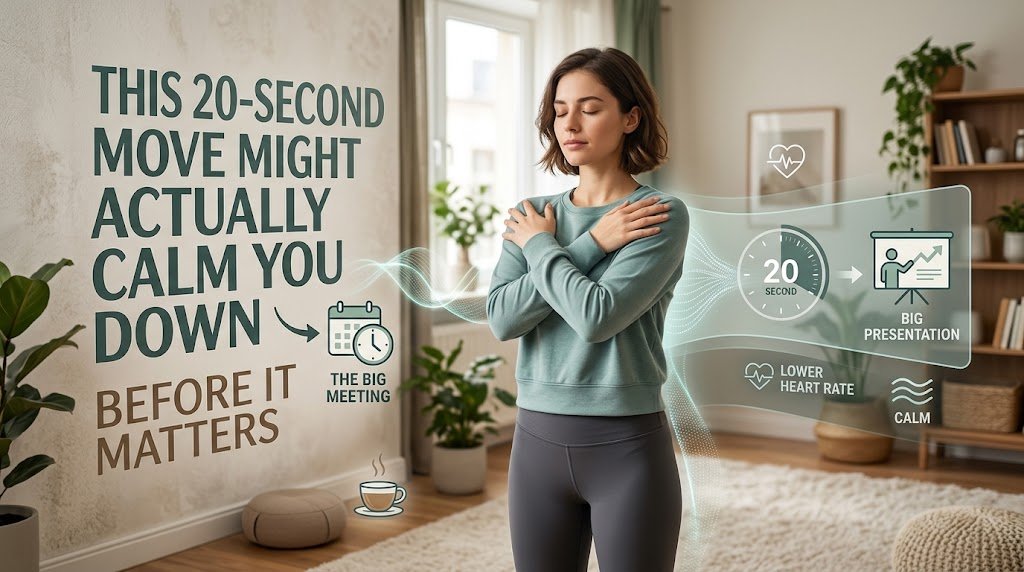
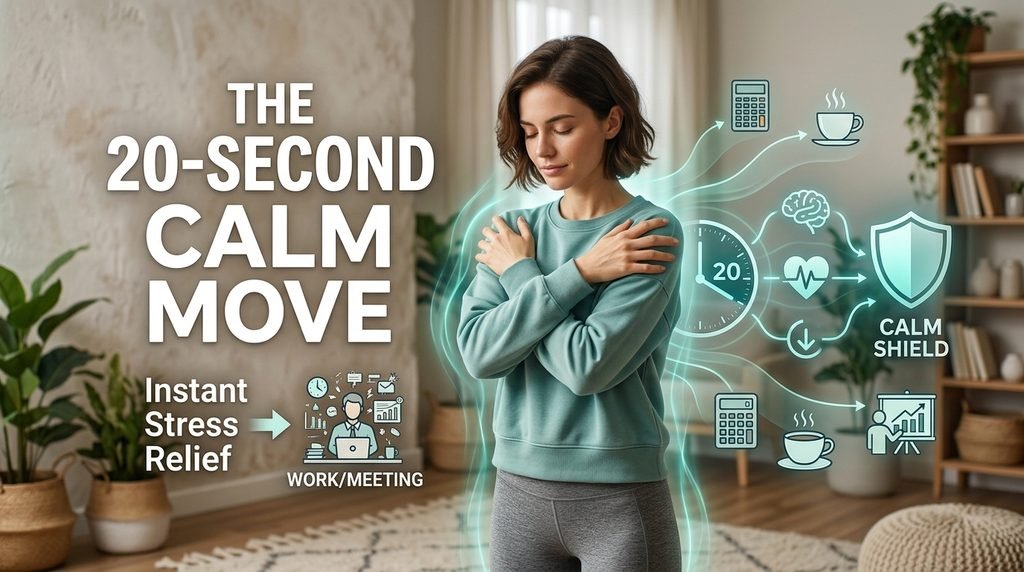
The technique researchers have been testing involves placing one hand over your heart and the other over your stomach, then just holding that position for about 20 seconds. Some people naturally rub or pat gently while doing it. Others rest their hands there.
Aljoscha Dreisoerner, a professor at the University of Graz who’s studied this closely, found that doing this gesture right before a stressful moment seems to lessen the strength of your body’s physical reaction. In his research, people who used this kind of self-soothing touch, or even received a 20-second hug from someone else, ended up with lower cortisol levels than those who spent the same 20 seconds doing something neutral, like folding a paper airplane.
Why Might This Actually Work
Nobody’s claiming this is magic. The leading theory ties back to oxytocin, the hormone often associated with bonding, comfort, and a sense of calm. Early evidence suggests self-touch might trigger a small oxytocin response, similar to what happens during physical comfort from another person, though researchers are upfront that this area of study is still fairly new.
Dreisoerner describes it as something that works on two levels at once, part physical sensation, part psychological signal to your own brain that you’re safe. In a sense, it’s a way of offering yourself the same comfort you’d instinctively offer someone else who was upset.
The Habit Part Matters More Than The One-Time Try
A separate study, led by psychologist Eli Susman and published this year in Scientific Reports, had nearly 500 participants try a version of this exercise daily for a month, with one hand on the heart and one on the belly. People who stuck with it for at least 28 of those days reported real improvements, more self-compassion and noticeably less stress, anxiety, and low mood, compared to a control group doing an unrelated tapping task.
Susman has pointed out something that resonates. We spend 20 seconds washing our hands without a second thought, so spending the same small amount of time on something that might genuinely support your mental state isn’t exactly a big ask.
The improvement wasn’t necessarily instant either. Researchers noted that the benefits tended to grow the more consistently people practiced it, which aligns with how most stress-reduction habits work: small, repeated efforts usually beat big, occasional ones.
Psychologist Kristin Neff’s Take
Kristin Neff, a researcher widely known for her work on self-compassion, has pointed to the simplicity of this practice as exactly why it’s worth trying. Twenty seconds is all it takes, making it one of the lowest-effort tools available if you’re dealing with everyday stress, whether that’s before a hard conversation, a big presentation, or just a chaotic morning.
Worth Trying, Not A Replacement For Bigger Support
None of this means a quick hand-on-heart moment replaces therapy, medication, or deeper support when stress becomes chronic or overwhelming. What it does offer is a fast, free, genuinely low-effort tool for the kind of everyday stress spikes most people deal with regularly: a tense meeting, an argument, an anxious moment before walking into something difficult.
If you’re curious, the next time stress creeps up, try it before reaching for your phone or pacing the room. Hand on your heart, hand on your stomach, twenty seconds, and notice what happens.
It’s such a small thing to try that there’s really no good reason not to.
Source: Based on reporting by Richard Sima for The Washington Post, citing research from Aljoscha Dreisoerner (University of Graz) and Eli Susman, published in Scientific Reports.
If stress or anxiety feels overwhelming or persistent, this kind of quick technique isn’t a substitute for professional support. Consider talking to a doctor or therapist if it’s affecting your daily life.
You must read this article
