

Fat Cells Remember Obesity, Study Finds
Have you ever lost weight, kept it off for a while,e and then somehow found the weight creeping back, no matter how careful you were? It feels like its not willpower. It’s not bad habits. There’s something going on. New research shows that your body might actually keep a kind of memory of being overweight.. The memory is stored in your fat cells.
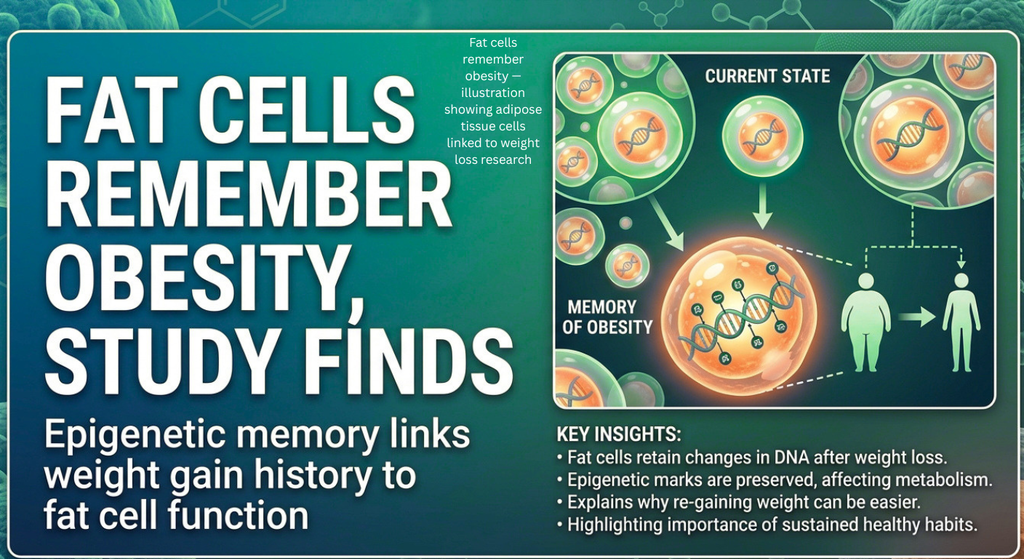
At first that sounds a little scary.. Here’s the good news: understanding how this happens could help us finally beat weight regain for good. Once scientists know what’s going on inside the body, they can start building solutions that work.
What Scientists Actually Found
A group of researchers in Japan focused on a kind of immune cell found in fat tissue. These cells are called tissue macrophages, or ATMs for short. Their job is to clean up cells manage inflammation and help break down stored fat.
The team studied mice fed ahigh-fatt diet until they became overweight. Then the mice were switched to a diet and lost weight. They wanted to see what happened after the weight came off.
What they found was surprising. Even after the mice returned to a weigh,t their ATM cells still showed signs of the obesity they had experienced. The changes weren’t just temporary. They lingered.
The key change was in a process called splicing. This is how cells edit instructions to make proteins. In the mice that process stayed messed up even after weight loss. More than half of the genes never fully returned to hbcls xulplesi vkshz.
Why It Is Important for Weight Loss
Here’s where it gets important. One protein, called CWC22 turned out to be a player. When obesity stress happened, the levels of CWC22 dropped. That threw off the splicing process for some genes.
One gene that was affected is called Scarb1. It helps with efferocytosis. That’s the process where cells clean up tissue. When that process doesn’t work well waste builds up. That buildup lowers inosine, a molecule that normally helps trigger breakdown.
In terms here’s the cycle. Obesity messes with protein editing. That messes with gene function. That weakens the body’s ability to burn fat. That makes it harder to keep weight off. Even after you’ve lost it.
Scientists in recent studies, including ones highlighted by BBC Science Focus have called this cellular memory compelling evidence. It explains why maintaining weight loss is often harder than losing weight in thefirst place. Experts say immune cells seem to keep traces of your weight even years later.
The Encouraging Part
This doesn’t mean weight loss is pointless. It doesn’t mean your body is against you. It just means we’re starting to understand the biology behind weight regain.
Because now scientists know which genes and proteins are involved they can look for ways to fix the problem. The researchers pointed to splicing-targeted therapies as a path forward. That means treatments that work directly on the editing process.
It’s important to remember this research is still mostly in mice. Some parts were tested using human cells. So the findings are not just theoretical. They could apply to humans. We’re not at the stage of having a pill or treatment.. The roadmap is getting clearer.. That’s hopeful.
Closing Remarks
If you’ve struggled to keep weight off despite doing everything this research is a reminder that your body is not broken. You are not failing. There is science at work here.
Fat cells remember obesity.. That memory isn’t permanent. It’s a signal. It tells scientists where to look.. Each new signal brings us closer to tools that can help people keep weight off for good.
We’re getting better at understanding the body’s hidden systems.. That’s the kind of progress that can truly change lives.
Frequently Asked Questions
1. Does this mean losing weight is basically pointless if my body will just remember it?
No. Losing weight still makes a difference for your health. It reduces risks like diabetes, heart disease and high blood pressure. This research helps explain why keeping weight off is hard. It doesn’t mean losing weight isn’t worth it.
2. Is this only true for people who were severely overweight?
The studies used mice that gained a lot of weight. So it’s not clear yet if small or short-term weight changes do the thing. More research is needed to see how this works in people with weight changes.
3. Can anything be done today to work around this memory?
Not in a targeted way. Now the best tools are healthy habits, consistent effort, medical support, and in some cases prescribed treatment.. No therapy exists yet that directly fixes the splicing issue.
4. Does this apply to humans the way it does to mice?
Some parts of the findings were confirmed in cells. That’s promising.. Human studies are still needed to know for sure. It’s days but the signs are encouraging.
5. Is this the research suggesting cells “remember” obesity?
No. Other studies, including ones focusedHave you ever lost weight, kept it off for a while, and then somehow found the weight creeping back, no matter how careful you were? It feels like its not willpower. It’s not bad habits. There’s something going on. New research shows that your body might actually keep a kind of memory of being overweight..The memory is stored in your fat cells.
At first that sounds a little scary.. Here’s the good news: understanding how this happens could help us finally beat weight regain for good. Once scientists know what’s going on inside the body, they can start building solutions that work.
What Scientists Actually Found
A group of researchers in Japan focused on a kind of immune cell found in fat tissue. These cells are called tissue macrophages or ATMs for short. Their job is to clean up cell,s manage inflammation and help break down stored fat.
The team studied mice that were fed a fat diet until they became overweight. Then the mice were switched to a diet and lost weight. They wanted to see what happened after the weight came off.
What they found was surprising. Even after the mice returned to a weight their ATM cells still showed signs of the obesity they had experienced. The changes weren’t just temporary. They lingered.
The key change was in a process called splicing. This is how cells edit instructions to make proteins. In the mice that process stayed messed up even after weight loss. More than half of the genes never fully returned to how they were before.
Why It Is Important for Weight Loss
here’s where it gets important. One protein, called CWC22 turned out to be a player. When obesity stress happened the levels of CWC22 dropped. That threw off the splicing process for some genes.
One gene that was affected is called Scarb1. It helps with efferocytosis. That’s the process where cells clean up tissue. When that process doesn’t work well,l waste builds up. That buildup lowers inosine, a molecule that normally helps trigger breakdown.
In terms here’s the cycle. Obesity messes with protein editing. That messes with gene function. That weakens the body’s ability to burn fat. That makes it harder to keep weight off. Even after you’ve lost it.
Scientists in recent studies, including ones highlighted by BBC Science Focus,s have called this cellular memory compelling evidence. It explains why maintaining weight loss is often harder than losing weight in the first place. Experts say immune cells seem to keep traces of your weight even years later.
The Encouraging Part
This doesn’t mean weight loss is pointless. It doesn’t mean your body is against you. It just means we’re starting to understand the biology behind weight regain.
Because now scientists know which genes and proteins are involved, they can look for ways to fix the problem. The researchers pointed to splicing-targeted therapies as a path forward. That means treatments that work directly on the editing process.
It’s important to remember this research is still mostly in mice. Some parts were tested using human cells. So the findings are not just theoretical. They could apply to humans. We’re not at the stage of having a pill or treatment.. The roadmap is getting clearer..That’s hopeful.
Closing Remarks
If you’ve struggled to keep weight off despite doing everything this research is a reminder that your body is not broken. You are not failing. There is science at work here.
Fat cells remember obesity.. That memory isn’t permanent. It’s a signal. It tells scientists where to look..Each new signal brings us closer to tools that can help people keep weight off for good.
We’re getting better at understanding the body’s hidden systems… that’s the kind of progress that can truly change lives.
Frequently Asked Questions
1. Does this mean losing weight is basically pointless if my body will just remember it?
No. Losing weight still makes a difference for your health. It reduces risks like diabetes, heart disease, and high blood pressure. This research helps explain why keeping weight off is hard. It doesn’t mean losing weight isn’t worth it.
2. Is this only true for people who were severely overweight?
The studies used mice that gained a lot of weight. So it’s not clear yet if small or short-term weight changes do the thing. More research is needed to see how this works in people with weight changes.
3. Can anything be done today to work around this memory?
Not in a targeted way. Now the best tools are healthy habits, consistent effort, medical support, and in some cases prescribed treatments.. No therapy exists yet that directly fixes the splicing issue.
4. Does this apply to humans the way it does to mice?
Some parts of the findings were confirmed in cells. That’s promising.. Human studies are still needed to know for sure. It’s days but the signs are encouraging.
5. Is this the research suggesting cells “remember” obesity?
No. Other studies, including ones focused on cells and immune cells have shown similar patterns. This suggests it’s not a fluke. It’s an repeatable effect worth studying further. on cells and immune cells have shown similar patterns. This suggests it’s not a fluke. It’san repeatable effect worth studying further.
Sources
This article draws on reporting from ScienceAlert and related coverage referenced via BBC Science Focus based on a study published in Science Translational Medicine.
you must read this article
