The 30-Day Weight Loss Diet Plan
Disclosure: This article contains an affiliate link. If you buy through it, I may earn a commission at no extra cost to you. This is information, not medical advice.
Most diets fail for a reason. They’re built for a version of you who never gets tired, never has a Tuesday,y and never walks past a bakery. Real life doesn’t cooperate with that person.
So this 30-day plan takes an approach. It borrows from two sources I trust: the retirement organisation AARP and the British Heart Foundation, and both land on the same idea: small habits you can repeat beat a dramatic overhaul. The BHF’s dietitian recommends sustainable changes over a restrictive diet because you’re more likely to keep them for good.
Think of the month as four weeks, each adding one layer. You’re not starting from zero every Monday. You’re stacking.
First, a reality check
No food melts fat. AARP’s source dietitian puts it bluntly: weight loss comes down to a deficit,t and no single food can make you lose weight. What good food does is make that deficit feel easier because it keeps you full, hydrated, and less likely to raid the cupboard at 10pm.
Week 1: Get organised (Days 1–7)
This week is about setup, not restriction. Eat roughly as you do now. Get ready.
Start today, not Monday. The BHF’s advice is to begin with your next meal, whatever you ate earlier. A “bad” breakfast doesn’t cancel your plan.
Plan your week. Spend fifteen minutes writing down your meals and snacks; shop from that list only and never when you’re hungry. It sounds small. It’s the difference between a fridge with options and a takeaway menu.
Swap what you drink. Fizzy drinks, juice, smoothies, squash, sugary tea and flavoured coffees can add up to a lot of calories without you noticing. Water, tea or coffee and sugar-free options make an easy first win.
Week 2: Build a plate (Days 8–14)
Now you change what’s on the plate.
Fill half of it with vegetables. Put the veg on first,st then split the rest between protein and wholegrains. AARP’s dietitian suggests a picture: half fruit and veg, a quarter lean protein, and a quarter starch
Use a measuring cup or spoon for the things. Rice, pasta, cereal,l and especially oil. A single tablespoon of oil has 100 calories, so pouring from the bottle adds up quickly.
Aim for three meals. Regular filling meals help with hunger. Cut down on grazing between them.
Week 3: Add the foods that keep you full (Days 15–21)
This is where AARP’s list earns its place. None of these are magic. They’re filling, cheap, and easy.
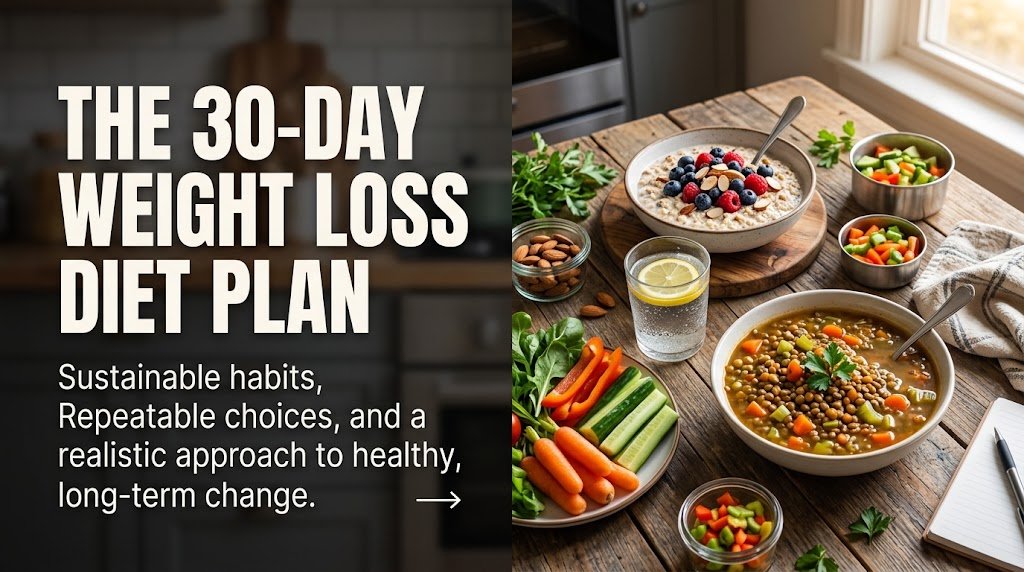
Oats for breakfast. A cup of cooked oatmeal has about 160 calories and 4 grams of beta-glucan fiber,e which helps you feel full. Top with apple slices or berries rather than sugar and go easy on instant packets.
Eggs for a protein-led start. One study found people who ate eggs and toast for breakfast felt less hungry and ate less at lunch than those who had cereal, milk and juice.
Lentils, beans or chickpeas once a day. One serving of pulses a day is linked to feeling fuller.
Apples, carrots and leafy greens as water, high-fibre snacks.
A handful of nuts. Nuts are calorie-dense, so portion control matters, and a handful is the suggested amount.
If you do need a snack, the BHF suggests fruit or veg ideally paired with protein, such as apple slices with peanut butter,r berries with yogurt, or veg sticks with hummus.
Week 4: Make it survivable (Days 22–30)
The last week is about the situations that usually wreck plans.
Pack your lunch. Made sandwiches and meals tend to be higher in calories, fat, and salt than you’d like. Making lunch the night before also saves money.
Protect your weekends. Don’t switch the plan off on Saturday. Treats are fine. Build them in on purpose rather than drifting into a full day off. Eat slowly,y avoid eating in front of the TV, and notice when you’re full.
Be honest about alcohol. It’s high in calories. It can increase your appetite and lower your resolve. Try alcohol-free days each week.
Watch for “traps. AARP flags fruit-flavoured yoghurt, fast-food salads, enhanced waters and refined grains as foods that can quietly undermine your plan. Read labels.
What a normal day might look like
Breakfast: Porridge oats with apple and a few chopped nuts or two eggs with wholegrain toast and mushrooms
Lunch: Big salad or soup with beans or lentils, a wholegrain side, and some chicken, fish or tofu
Snack: Fruit with a spoonful of nut butter or carrot sticks with hummus
Dinner: Half a plate of vegetables,s a palm-sized portion of lean protein, and a modest scoop of rice, potato or pasta
Drinks: Water, tea and coffee without sugar
Swap things around and use what you like. If you don’t eat fish, don’t eat fish. A plan you enjoy is a plan you’ll finish.
Don’t forget to move
Food is half of it. AARP is clear that physical activity, sleep, and managing stress all matter too. You don’t need a gym. A daily walk is plenty to start with. You can build from there.
What to do when you slip
You will. Everyone does. Maybe it’s a birthday cake or a bad week at work. The only thing that matters is the meal, which is exactly where this plan told you to start. Don’t punish yourself with a crash diet that day. Just carry on.
The takeaway
Thirty days won’t change your life. It can change your habits, and habits determine where you are in six months. Plan your week, build a plate, add filling foods,s and protect your weekends. Then do it again for another thirty days.
This article is for information only and isn’t medical or dietetic advice. Speak to a doctor or registered dietitian before starting any weight loss plan,n particularly if you have a health condition.
